-Photoroom.png)
Trip and Fall
Injured in a trip and fall in Florida? We hold negligent property owners accountable for your injuries and bills.
Trip and Fall Injuries in Florida
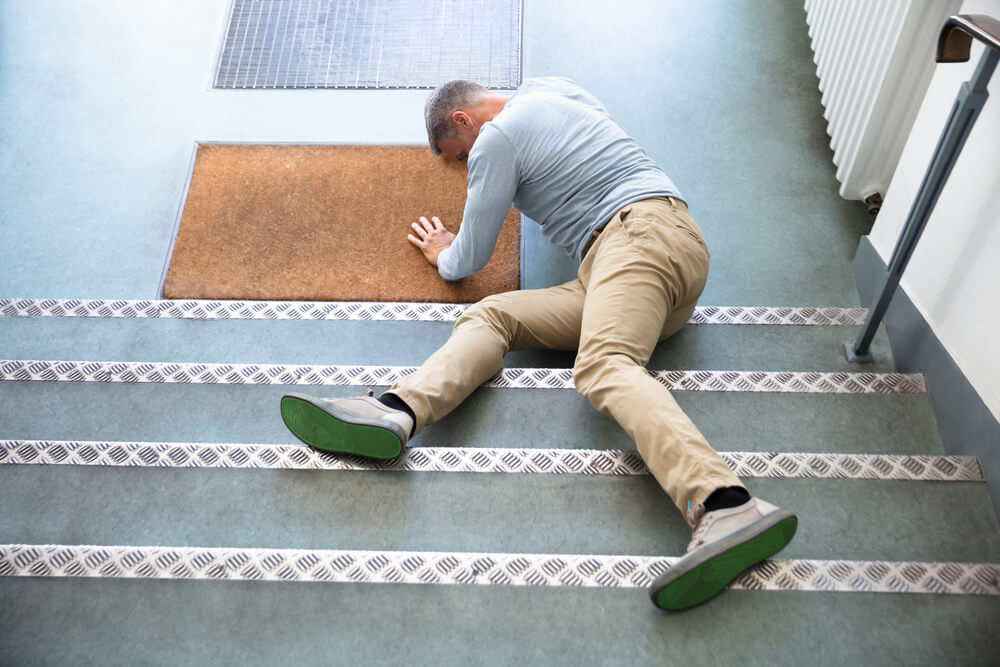
A trip and fall happens when you catch your foot on a raised, broken, or protruding hazard, an uneven sidewalk, a torn mat, an unmarked step, an exposed cord, or debris in an aisle, and are thrown to the ground. These falls can cause fractures, sprains, head injuries, and back injuries, particularly for older adults. Florida premises-liability law holds property owners and businesses accountable when their negligence creates or allows such a hazard.
To recover, you generally must show that the owner created the dangerous condition, or knew or should have known about it, and failed to fix it or warn you. For business premises, Florida Statute 768.0755 sets specific requirements for proving the business had notice of the hazard, a rule you can review in the Florida Statutes. Florida's comparative-fault system can reduce, but not necessarily eliminate, recovery if you share some blame.
Hazards are often repaired quickly, so documenting the scene immediately is vital.
This is part of our Personal Injury practice. Related claims include slip and fall and homeowner negligence. Review our case results, learn about Attorney Edward G. Jimenez, or request a free consultation by calling (321) 465-3425.
Trip and Fall vs. Slip and Fall
Although often grouped together, the two are different. A trip and fall involves catching on a raised or protruding hazard that pitches you forward, while a slip and fall involves losing traction on a slick surface. The distinction matters because it shapes what hazard we must prove and how the injury occurred. Both are governed by Florida premises-liability law and the owner's duty to keep the property reasonably safe.
Proving the Owner's Notice
For falls in a business, Florida Statute 768.0755 generally requires showing the business knew or should have known about the dangerous condition. Evidence of how long the hazard existed, prior complaints, inspection and maintenance records, and surveillance footage all help establish that notice. We pursue these records, often before they are lost, to prove the owner had a reasonable opportunity to fix or warn of the hazard and failed to do so.
Document the Scene Immediately
Trip hazards are frequently repaired soon after a fall, so act fast: photograph the exact condition that caused your fall, report the incident and get a written report, collect witness names, and keep the shoes and clothing you were wearing. Seek medical care promptly to tie your injuries to the fall. We use this evidence to build a clear, well-supported claim. Call Jimenez Legal at (321) 465-3425 or request a free consultation.
Client Reviews
Frequently Asked Questions
A trip and fall involves catching on a raised or protruding hazard, while a slip and fall involves a slippery surface.
When they created the hazard or knew, or should have known, about it and failed to fix or warn of it.
Photograph the hazard, report it, get witness information, and seek medical care.
Florida uses comparative fault, so you may still recover a reduced amount; an attorney can advise.
Yes, Florida limits the time to file injury claims, so act promptly.
Need Legal Services? Call us now!
Give us a call today and let us help you with what we do best
.jpg)